Monday, February 23, 2015

Review of M.P. McVey's Plod On, Sleepless Giant (2015)


REVIEW OF PLOD ON, SLEEPLESS GIANT by M.P. McVey
“Could the Maker have underestimated his own creation, Tyriano pondered. Could it be that Temelephas has learned to feel? Could it be, simply—that over time—this great elephant has taught himself to break his own nature? Tyriano’s face brightened as he
continued to explore all the possibilities.  “What could this lead to?” he asked.

All great fantasy/science-fiction novels must ask a question: that question could be simple, dismissed in a mere handful of pages, or it could be complex, requiring volume after volume to ferret out.  As the quote above suggests, M.P. McVey asks a big question in his first book, Plod On, Sleepless Giant.  What is the nature of the world as its been handed down to us?  Do we truly know why we know what we know?  Or even who we are?  By exploring this question from multiple perspectives (both semi-divine and painfully human), McVey not only presents us with a fabulous tale, but he makes us question the nature of stories themselves.  For to read is to come closer to knowing your place in the universe, however large or small; each book is a step closer toward the most profound knowledge of all.  This book might actually count for two or three steps, particularly if the reader takes time to savor the small details hidden along the way. 

Monday, December 22, 2014

Matt Madden's 99 Ways to Tell a Story (2005)


"Can a story, however simple or mundane, be separated from the manner in which it is told?" (Matt Madden) 

I often teach a short Intercession (2 week) course on Comics/Graphic Novels at ECU, and in that class I try to stress the limitless possibilities of the comic medium.  A simple story, with a slight shift in words, perspective, shading, sound effects, color, or frames, can gain hidden depth and purpose.  Or it can simply become another simple story.  We always do an exercise early on lifted from Scott McCloud's seminal book, Understanding Comics, where I ask students to fill in dialogue and narration for a basic 5-frame story.  Depending on what words the students add, the story either sticks close to the visual narration or becomes hilarious, tragic, or disturbing.  Matt Madden takes this exercise to a whole new level in his amazing book, 99 Ways to Tell A Story: Exercises In Style (2005), where he tells the same story 99 Ways.  These "ways" include everything from changing the style, the genre, the order, and even questioning what story is being told in the first place.  It's a clever, but surprisingly captivating read inspired by Raymond Queneau's Exercises in Style which does much the same thing in words.  Yet the sheer range of Madden's technique and his profound imagination make this book more than a mere exercise; it's a story in its own right, and one that changes from page to page, even if you think you know the outcome.

Sunday, December 14, 2014

BOOKS ARE NOT PRODUCTS: Reflections on Reading Bad Reviews of Classic Books On-Line


I recently confronted someone on one of these endless book review sites (Goodreads, etc.) who gave Stevenson’s The Strange Case of Dr. Jekyll and Mr. Hyde a 1-star review.  The review consisted of little more than an expression of annoyance that she had even picked up the book; it was boring, it had no interesting characters, and worse still, it wasn’t even scary!  She dismissed it with a one-star review and warned others not to bother with it, since she had no idea why people considered it a classic.  I asked her if she didn’t think it was a bit harsh to give a book that had survived well over a century and was beloved by millions (and had created a cultural myth that had given rise to countless copycats, such as The Hulk) a mere one-star.  The reviewer hotly responded that it was “her right” to give the book one-star, and that “you can’t censor my reviews!”  She went on to say that “I hardly think I’m going to hurt Stevenson’s book sales, so what does it matter?”  Clearly, my “attack” on her (as she called it) was based more on capitalism than aesthetics: once assured that his books would continue to sell, and make money for his estate, I should rest easy and withdraw my petty scruples about damaging the book’s reputation.  Isn’t it all about money, after all?  Clearly that’s what pissed her off so much...that she had spent, what, a few bucks for the book (or the e-book) of the novel only to be so bitterly disappointed?

Sunday, November 30, 2014

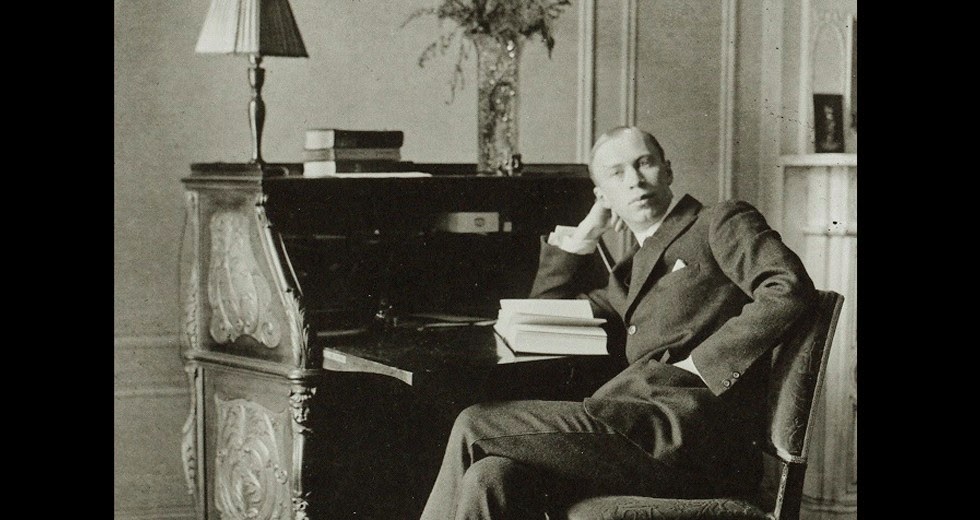
Prokofiev’s Symphonies: A Cycle for the Ages?


In classical music we refer to Beethoven’s Nine Symphonies, or Schumann or Brahms’ Four, or the Nine of Bruckner or Mahler.  To a lesser extent, the Seven of Sibelius are invoked, or the Fifteen of Shostakovich, the Three of Rachmaninov, or the Nine of Dvorak (though almost no one plays the first four).  Then there are composers who despite writing a good deal of symphonies, never composed a true “cycle” in the Romantic sense.  For many critics, a composer’s symphonies need to have some kind of consistency or development which makes them all of a piece, each one building on the other or reaching to some immeasurable height.  Beethoven’s Nine are all great statements, even the early, Mozartian ones; this is certainly true of Bruckner’s massive essays in symphonic form, as each one attempts to take up the struggle where Beethoven’s Ninth left off. So what do we do with someone like Prokofiev, who wrote seven magnificent, eccentric, erratic works which often defy categorization and are almost never played (and rarely recorded as a set).  Can we approach his symphonies are a cycle, though his approach to symphonic writing was haphazard and often blatantly theatrical (as several works borrow from his stage music)?  Or even more to the point, does a cycle have to consist of equally popular and lasting works, or can some have almost no identity outside of the cycle itself?  Here’s a quick look at Prokofiev’s seven—er, seven and a half—symphonies and why they should be considered as a cycle in their own right, as well as magnificent compositions individually. 

Monday, November 24, 2014

Precusors to Comics: The Art of Franz Masereel


FRANZ MASEREEL

Considered the greatest twentieth-century master of the woodcut, and by many as the grandfather of the graphic novel, Franz Masereel (1889-1972) was born in Belgium and lived throughout Europe in the years before WWI.  Honing his craft as a graphic artist in various journals, Masereel perfected an expressionist style influenced by contemporaries such as Delaunay, Braque, and Marc.  Additionally, his literary influences can be seen in the numerous illustrations he did for authors such as Thomas Mann, Stephen Sweig, and Emile Zola.  Masereel emerged as a pacifist in WWI with strong Communist sympathies—ideals embodied in his most ambitious works, his so-called “novels” in woodcuts.  These works tell visual narratives about capitalism, man’s isolation in his modern metropolis, the decadence of the bourgeois, and the rising might of the proletariat.  His most famous works are A Passionate Journey (1919), an allegorical narrative of modern man’s existence, and The City, a “vision in woodcuts,” which documents the decline and eventual fall of a Berlin-like metropolis.  Though he sided with no one political movement, his works were warmly championed by Socialists and banned by the rising Nazi movement (forcing him to flee Paris on the eve of the Nazi occupation).  However, his humanity and sheer artistic appeal make it impossible to read his works as propaganda.  The pioneering graphic novelist Will Eisner (The Spirit, A Contract With God) cited him as a seminal influence on his work, and one of the first true visionaries of the comic book form—though he never viewed his work in this medium.  His influence has been further cited by notable comic book critic, Scott McCloud (Understanding Comics), and undoubtedly influenced Marjane Satrapi’s woodcut-style drawings in Persepolis I & II.  

Monday, November 10, 2014

"I thought myself very rich in Subjects": Re-Reading Defoe's Robinson Crusoe


“I thought myself very rich in Subjects”: Re-Reading Defoe’s Robinson Crusoe (1719)

Robinson Crusoe is a book everyone sort of knows, perhaps more for the man than for his book.  The central myth of the shipwrecked Englishman, forced to reconstruct society from the debris of a dashed vessel, appeals to a deep, secret well of childhood within us all.  For this reason, the 18th century virtually adopted it as a children’s book, with writers such as Rousseau suggesting it should be the first and perhaps only book in a child’s library.  Partly this was to inspire the imagination with bold, noble deeds of self-sufficiency, but also because the book spoke so clearly and directly to all men.  Writing in 1822, Charles Lamb noted that Defoe’s manner of writing “is in imitation of the common people’s way of speaking, or rather of the way in which they are addressed by a master of mistress, who wishes to impress something upon their memories, and has a wonderful effect upon matter-of-fact readers.”  For generations, this ability to speak to common people of a common man who did uncommon deeds assured its literary immortality.  Only later, toward the 20th century, did readers begin to draw back from its unrelenting “matter-of-fact” tone, and its inability (to paraphrase Dickens) to make readers either laugh or cry.  In a book that promised exotic landscapes, strange peoples, and the occasional scrape with pirates, Defoe merely gives us lists of seeds planted, gold discovered, and natives slain.  Pirates of the Caribbean it most decidedly is not. 

Sunday, November 2, 2014

The Forgotten Russian: The Music of Anton Rubinstein


The Forgotten Russian: The Music of Anton Rubinstein (1829-1894)

“Russians call me German, Germans call me Russian, Jews call me a Christian, Christians a Jew. Pianists call me a composer, composers call me a pianist. The classicists think me a futurist, and the futurists call me a reactionary. My conclusion is that I am neither fish nor fowl—a pitiful individual” (Anton Rubinstein)

History is like a great wave crashing down on the sandcastle of art: for a moment, everything is obscured, but once it begins to recede, a few details of the castle remain—a tower, perhaps, standing tall against the ruins of time.  Our moment of time is like the wave; we can’t really tell what will survive and what will perish.  Only with the passing of time can we recognize art that continues to speak to us, with a voice that even hundreds of years later we can understand.  However, this metaphor leaves one important detail out: the castle can be rebuilt.  With art, the reconstruction is simple; discovering the work of one ‘survivor’ often leads to curiosity about his/her contemporaries, whose works may have been washed away into the ocean of time.  Yet most of these works remain, buried quite shallowly in the sand.  A simple plastic shovel (and in our time, the wonders of the internet) is all that is required to earth the treasure trove of riches lying scattered at our feet.  And what riches!  The ocean, it seems, is quite fickle and can’t really distinguish between good or bad, timeless or worthless art.  Quite often, a great work—say, Vivaldi’s Four Seasons concertos, or Aphra Benh’s Oroonoko—are uncovered after hundreds of years of neglect.  At other times, we merely find a completely enjoyable work of art that will probably disappear with the next wave.  Such a discovery is the work of Anton Rubinstein, a once celebrated composer/pianist whose memory lives on solely through his association with a much more lasting composer, Tchaikovsky. 

Sunday, October 26, 2014

Rutu Modan's The Property (2013), translated by Jessica Cohen


“I know why you came to Warsaw, Regina.  You came to tell me that our son is dead.” 

This statement, made by an old man to a locked hotel door, is one of the most poignant moments from Rutu Modan’s stunning graphic novel, The Property.  I’ll tell you the significance of this statement later, but first I need to give you a sense of the tremendous scope and intimacy of this novel.  It concerns a grandmother and her granddaughter traveling to Warsaw, ostensibly to go on a “survivor’s tour”—not only to see the infamous concentration camps, but also to revisit old towns and neighborhoods which were once thriving Jewish centers.  Secretly, however, the grandmother (Regina) plans to visit a man from her past, a Polish lover with whom she had a son before fleeing to Palestine in the dawn of WWII.  This man, interestingly, now lives in the apartment once occupied by her parents, possibly under dubious circumstances.  Her granddaugher, Mica, knows nothing of all this, though assumes the purpose of the trip is partially to recover her property (a lawyer wrote the family a letter about it in the 90’s, but the grandmother refused to investigate—until now). 

Tuesday, September 23, 2014

Should Literature Professors Write Fiction?


When I was halfway through my MA program for Literature, a PhD student in the program gave me the following sage advice: “If you’re going to be a serious student, don’t take creative writing courses.”  Partly he meant that since you’re getting a degree on literature, you should chase one rabbit at a time.  Writing a short story is time you could be writing your MA Thesis, or drafting an article, or doing something to get you into a conference or PhD program.  However, beneath this was a threat of not being taken seriously: enrolling in a creative writing course at the MA level (for a non-creative writing MA) is amateurish.  It smacks of not being quite serious, or worse, being a dilletante.  “I would never enroll in a creative writing course,” he said, without a hint of sarcasm.  I went ahead and took the course, since it was taught by an author whose works I deeply enjoyed.  No regrets, either: I learned a lot from the course, finished my MA Thesis, and got into a halfway decent PhD program. 

Sunday, September 21, 2014

The Book of White: Reading T.H. White's The Once and Future King


The Book of White: Reading T.H. White’s The Once and Future King

Most literary folk vaguely know the story of King Arthur: that he pulled a sword from the stone to become king of England...that the wizard, Merlin, helped him achieve power through various mystical lessons...that his wife, Guenevere, fell in love with the greatest knight in the land, Arthur’s right-hand man, Lancelot du Lac...that Arthur was seduced by his half-sister, Morgan le Fay, to give birth to Mordred, who became his implacable foe...and so on.  Yet no two stories of Arthur agree on all the specifics, so whether you read Malory’s Morte d’Arthur, the anonymous The Quest for the Holy Grail, Chretien de Troyes’ Romances, or the Lays of Marie de France, you get a very different Arthur, Guenever, and Lancelot.  That’s why T.H. White’s version of the legend is so welcome, since he takes bits and pieces from each and translates them from his own perspective to fit his own philosophy.  Simply put, the four books of The Once and Future King (or five, if you count the suppressed The Book of Merlyn) are one of the greatest fantasy epics ever written, and certainly among the most original.  There’s nothing quite like it in literature, though it shares a satirical heritage with Swift’s Gulliver’s Travels and a sense of the fantastic and absurd with Nikolai Gogol.  Those expecting a grim, fantasy epic in the vein of Tolkein or Marion Zimmer Bradley will be somewhat disappointed.  However, like all books, if you approach it on its own terms, and appreciate it as a wholly unique take on the Arthurian epic, you’ll be surprised, confused, delighted, and amazed by White’s achievement. 

Wednesday, September 3, 2014

"This Class Would Be Just Perfect Without All the Students!" (and other complaints of the novice professor)


About a week ago, an article was published on Book Riot entitled “The Joys and Sorrows of Teaching Literature,” focusing on a brief career teaching college English as a TA: http://bookriot.com/2014/08/26/joys-sorrows-teaching-literature/#comment-1568114287

Of course, the title is misleading: the article is only about the sorrows and the thesis consists largely of this: students don’t love reading the way you do, and if you want to keep loving literature you should quit teaching immediately (or better yet, don’t go into the field at all).  This young teacher was disillusioned by the incredible disinterest of her students, particularly when she tried to share her love of language and metaphor to students who simply wanted to pass a class.  This is indeed disturbing to any teacher in love with his or her subject, but of course not surprising at all: why should students made to take a required class be expected to love it the same way as the professor being paid to teach it (or in this case, the TA)?  What bothered me about the article—and I’ve read several like it—is the sense of pervasive defeat in every sentence: you can’t teach literature to students, they don’t care, the profession is full of jargon, so I’m going to retreat into a book club and simply enjoy reading again.

Monday, August 25, 2014

My First Novel is Free This Monday-Wednesday on Amazon

My first novel, The Count of the Living Death is free on Amazon this Monday-Wednesday (e-book only, of course).  It's a short, fast-paced YA fantasy that should appeal to all ages (I mean, I wrote it, and I'm 40!), so give it a try or your money back (well, it's free, so...) 

Here's the blurb: Count Leopold always wondered about the strange chest sealed with three magic locks. His father warned him never to mention the Box—nor pry into the secret chamber where it was kept. Now the Box has begun speaking to Leopold, begging him to find the key and undo the hateful locks. If he does so, it promises him to fulfill his every desire, even offering him the hand of the forbidden—and forbiddingly named— Lady Mary Bianca Domenica de Grassini Algarotti. However, before unfastening the third lock he catches a glimpse of something unspeakable inside—and turns to the only man who shared his father’s secret, the legendary Conjurer-Magician, Hildigrim Blackbeard. A man who, if the stories are true, will exact a terrible price in return for his service.

You can find it here: http://www.amazon.com/Count-Living-Chronicles-Hildigrim-Blackbeard-ebook/dp/B00FQ6711Y/ref=pd_rhf_gw_s_t_1


ALSO, you can read a preview of the book at the bottom of this blog.  

Sunday, August 3, 2014

“Classical” Film Scores: Inspiring the “Wild and Wanton Herd"


In Act V of The Merchant of Venice, the two lovers Lorenzo and Jessica are listening to music on a moonlit night.  Though Jessica is uneasy about the music—and possibly Lorenzo’s faithfulness—Lorenzo proclaims the power of love through music:

For do but note a wild and wanton herd
Or race of youthful and unhandled colts
Fetching mad bounds, bellowing, and neighing loud,
Which is the hot condition of their blood;
If they but hear perchance a trumpet sound,
Or any air of music touch their ears,
You shall perceive them make a mutual stand,
Their savage eyes turned to a modest gaze
By the sweet power of music...The man that has no music in himself,
Nor is not moved with concord of sweet sounds,
Is fit for treasons, strategems, and spoils...Let no such man be trusted (V.1.). 

In Hollywood, it’s generally assumed that there are few such men—or women—in the audience.  Indeed, the “wild and wanton herd” is always ready to be manipulated by the blood and guts power of music, which is arguably the key component to movie magic.  To test this, mute a particularly action-packed or emotional scene and compare it to the original.  More than the dialogue is missing: a crucial element of the atmosphere dissipates, leaving a kind of shadow play on screen, recognizable only to those who have seen the original.  Oftentimes scores can be needlessly obtrusive or sentimental, and for this reason can get in the way of the story and the actors.  At their best, however, music accentuates the drama and makes us feel things ‘between the lines’ of a film which no amount of acting or dialogue can possibly create.  Bette Davis famously complained that Erich Korngold’s surging, Romantic scores all too often upstaged her, which can be well imagined when listening to the soundtrack to Elizabeth and Essex or Captain Blood.  So what is the proper role of a movie soundtrack: background support or lead actor in its own right?